
Inside the approved price
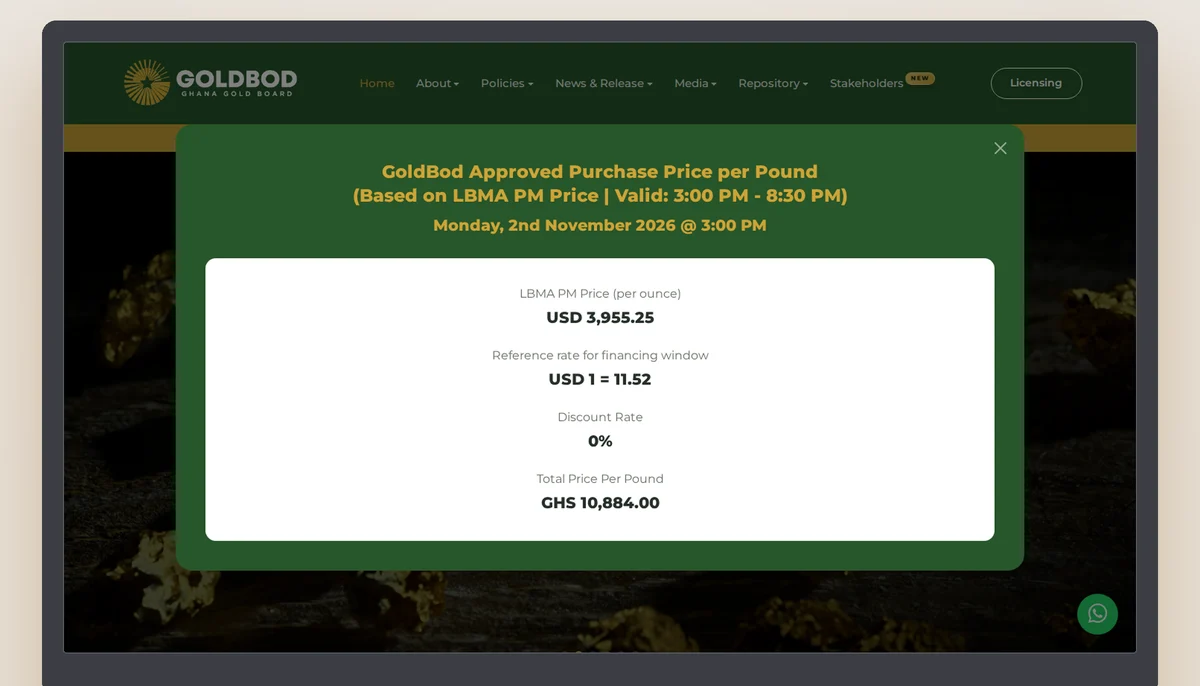
The GoldBod approved purchase price is not a single number plucked from the air. It is built from the LBMA price in US dollars, a cedi reference rate the board chooses, and any discount the board applies. The table above shows those parts and the result.
What the price is made of
The LBMA price, GoldBod's reference rate, the interbank rate, and the gap between the board's price and the world metal.
| Today | LBMA, US$ per ounce | GoldBod cedi rate | Bank of Ghana interbank | Rate gap, % | Price against world metal, % |
|---|---|---|---|---|---|
| The price window in force | US$3,955.25 | 11.5200 | 11.6600 | -1.20% | -0.92% |
Price of: 02.11.2026
The LBMA price is the starting point
The LBMA price is the world benchmark for gold, set in US dollars twice a day. The Ghana Gold Board uses that dollar price as the basis for its approved purchase price. The table above shows the LBMA price in dollars for the current window. That is the raw material, before any cedi conversion or discount.
The LBMA price is not the only world price, but it is the one the board has chosen. A reader who compares with another source may see a small difference. The board's page shows the LBMA price it uses, and this site reads that figure. The table above reflects what the board saw, not what another source might have reported.
The cedi reference rate is the board's own
The board does not use the Bank of Ghana's interbank rate to convert the LBMA dollar price into cedis. It uses a reference rate of its own. The table above shows that reference rate beside the interbank rate, because the two can differ. On the day measured, the reference rate sat more than one per cent below the interbank rate.
A lower reference rate means fewer cedis for the same dollar price. A seller who is paid at the approved price is being paid at the board's reference rate, not at the interbank rate. That is not a hidden fee; it is the rate the board uses to translate its dollar benchmark into cedis. The gap between the two rates is a cost to the seller, and it changes from day to day.
Any discount comes out of the LBMA price
The board may apply a discount to the LBMA price before converting to cedis. The table above shows any discount as a separate column, if the board's published figures allow it to be seen. The discount is a reduction from the world price, and it is one reason the approved price can be below the world comparison at the interbank rate.
A seller should ask the licensed buyer for a written breakdown that shows the LBMA price, the reference rate, and any discount applied. The board publishes the approved price, but the buyer's slip may show the same components. A written breakdown makes it possible to see whether the approved price was applied correctly, or whether an additional adjustment was made.
The result is the approved pound price
The approved purchase price per pound is the result of the LBMA price, the reference rate, and any discount. The table above shows that result in cedis. It is the price licensed buyers must pay for gold of the board's stated fineness. A buyer may pay more, but not less.
The result is a single figure, but it is not a fixed one. It changes twice a day when the LBMA benchmarks are published, and it can change again if the reference rate is updated. A seller who is offered a price should check the board's page for the current approved price, because the table above is updated from this site's readings, not in real time.
What the gap to interbank means for a seller
The table above shows the world gold price at the Bank of Ghana's interbank rate beside the approved price. The gap between the two is the combined effect of the reference rate difference and any discount. A wider gap means the seller is receiving less than the interbank rate would give; a narrower gap means the opposite.
A seller cannot choose to be paid at the interbank rate, because the board is the sole buyer and licensed buyers must pay the approved price. But knowing the gap is useful: it shows how much of the world price is being lost to the cedi conversion and the discount. A seller who is offered less than the approved price should ask why, and should see the written breakdown.
The reference rate can change between windows
The board publishes two prices on trading days, one off the LBMA AM benchmark and one off the LBMA PM benchmark. The reference rate can change between those windows, even if the LBMA price does not. That means the approved price in cedis can move without any move in the world gold price.
A seller who is negotiating a sale should know which window's price applies. The board's page shows the current approved price, and a licensed buyer should quote the price for the window in effect at the time of sale. The table above shows the latest window's figure, but a seller should confirm the window with the buyer.
Key facts on the inputs
More on the GoldBod price
Questions about the gold price
q
Is the reference rate the same as the interbank rate?
a
No. The reference rate is the board's own rate for converting the LBMA dollar price into cedis. The interbank rate is the Bank of Ghana's mid rate. The two can differ, and the table above shows both so the gap can be seen.
q
What is the discount?
a
The discount is a reduction the board may apply to the LBMA price before converting to cedis. It is one reason the approved price can be below the world gold price at the interbank rate. A seller should ask for a written breakdown that shows any discount.
q
Can a licensed buyer pay less than the approved price?
a
No. The approved price is the minimum. A buyer may pay more, but not less. If a buyer offers less, the seller should ask why and see the written breakdown. The board's page shows the current approved price.
q
Why does the approved price change twice a day?
a
The board publishes two prices on trading days, off the LBMA AM and PM benchmarks. The LBMA price moves during the day, and the reference rate can also change. Each benchmark gives a new approved price.
q
How can I tell if the reference rate is fair?
a
You cannot, because the board chooses the rate. But you can compare it with the interbank rate shown in the table. A large gap means the seller is receiving fewer cedis than the interbank rate would give. That is a cost to bear in mind.
Trade the gold price with FxPro
A contract for difference on gold settles in your account's currency and carries no claim on any metal. Opening an account requires identification and takes a day or two. A practice account costs nothing.